

NNCO is the native utility token powering the NeuraNest Core ecosystem — a carefully designed economic primitive that aligns incentives across a global network of compute providers, model developers, Agent builders, validators, and end-users. With a hard-capped total supply of 10 billion tokens, NNCO functions as the exclusive medium for gas fees, staking rewards, contribution payments, governance voting, and priority resource access. Unlike speculative assets, its value accrual is tightly coupled to real network usage: every distributed training task, Agent collaboration, inference request, and resource lease requires NNCO, creating organic demand that scales with ecosystem adoption. The token’s utility-first design, combined with deflationary pressure and community-heavy allocation, aims to foster long-term holding, prevent excessive concentration, and ensure that economic rewards flow primarily to participants who advance collective AI intelligence rather than passive holders.
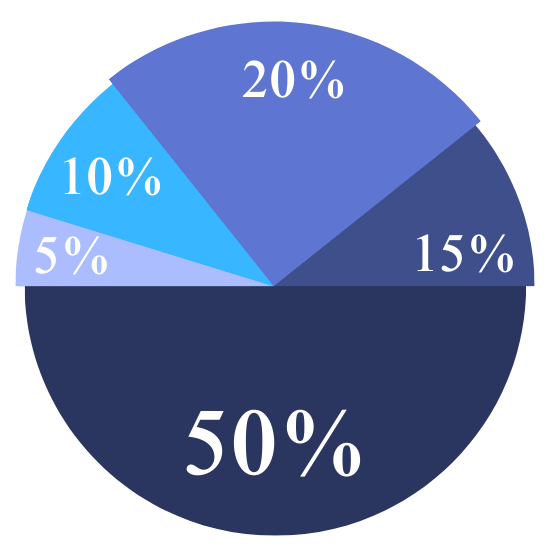
The tokenomics model is engineered for sustainability and fairness. 50% of the total supply is dedicated to community and ecosystem incentives — including mining rewards, task bounties, airdrops, and developer grants — ensuring broad distribution and continuous engagement. The remaining allocation supports long-term development (20% vested reserves), liquidity provision (15% for DEX/CEX pools), strategic partnerships (10%), and early contributors (5% locked), with strict vesting schedules tied to technical milestones and DAO oversight to prevent dumps and align interests.This structure creates a self-reinforcing flywheel: increased network activity drives higher transaction volume and revenue share, triggering more burns and buybacks, which reduces circulating supply and enhances scarcity — ultimately benefiting active contributors and stakers while maintaining price stability through genuine utility rather than hype.
NeuraNest Core's token allocation is meticulously designed to prioritize long-term ecosystem growth, community participation, and sustainable development while preventing early concentration and ensuring alignment among all stakeholders. The total supply is permanently capped at 10 billion NNCO tokens, with no additional minting possible after launch. This fixed cap creates inherent scarcity that strengthens with network usage.The allocation breakdown is as follows:
This balanced distribution model places the majority of tokens in the hands of the community and active contributors, creating a strong foundation for decentralized ownership and value accrual tied directly to real utility and network growth.
Answer: The hybrid Proof of Stake (PoS) and Proof of Useful Work (PoUW) consensus in NeuraNest Core is a cornerstone of its tokenomics, blending security with productive incentives to create a sustainable economic model. In PoS, NNCO staking determines validator selection, where holders lock tokens to participate in network governance and earn baseline rewards, encouraging long-term holding and reducing sell pressure. PoUW elevates this by requiring staked nodes to perform verifiable AI tasks—like gradient computations or model validations—before claiming block rewards, ensuring that energy expenditure directly contributes to ecosystem value rather than wasteful hashing. This alignment ties token utility to real-world AI advancement: as more compute is contributed, network throughput increases (targeting 1000 TPS via sharding), driving higher transaction volumes and gas fees paid in NNCO. Economically, it creates a flywheel where staking boosts PoUW reward weights, amplifying earnings for active participants while passive holders benefit from overall scarcity. Compared to pure PoW chains, PoUW minimizes environmental impact (reducing carbon footprint equivalent to aviation-scale emissions in centralized data centers) and maximizes efficiency, with rewards dynamically adjusted based on task quality and FLOPS. In tokenomics terms, this prevents inflation by channeling 100% of block rewards into useful work, fostering deflation through usage-linked burns (0.5% per transaction). Ultimately, this mechanism democratizes AI infrastructure, ensuring NNCO's value accrues from genuine contributions rather than speculation, positioning the token as a resilient asset in the $500 billion distributed AI market projected by 2030.
Answer: Staking NNCO is integral to NeuraNest Core's tokenomics, serving dual purposes in incentives and governance while reinforcing network security and long-term alignment. Users stake tokens to participate in PoS validator selection and amplify PoUW rewards, where longer lock-ups increase weight for compute contributions, model validations, or Agent tasks—directly boosting earnings based on FLOPS, quality scores, and completion rates. This creates a meritocratic system: high-performing stakers earn more, incentivizing efficient resource sharing and reducing idle compute waste globally. Tokenomics-wise, staking locks supply, enhancing scarcity alongside deflation mechanisms (0.5% burns + revenue buybacks targeting >5% annual reduction). In governance, staked NNCO grants voting power in the DAO, scaled by amount and duration to favor committed holders—proposals require 1000 NNCO minimum, with 7-14 day periods and quadratic voting to mitigate whale dominance. Holders influence upgrades, incentive tweaks, and reserve unlocks (e.g., 20% dev reserves tied to milestones like mainnet or TVL goals), ensuring decisions reflect community interests. This structure transforms staking from passive yield farming into active ecosystem building: contributors stake to access priority scheduling, lower latencies, and exclusive features, while governance rights empower users to shape the platform's evolution. Compared to traditional staking models, NNCO's integration with useful work elevates it, capturing value from AI tasks (70% revenue to contributors) and fostering a self-sustaining loop where staking drives participation, which in turn appreciates token value in a projected 30%+ distributed computing market share by 2030.
Answer: NeuraNest Core's deflationary tokenomics is engineered for enduring value accrual, countering inflation through mechanisms tied to network vitality. A 0.5% burn on every transaction (gas, trades, tasks) automatically reduces supply with each use case—distributed training, Agent collaborations, or inference—scaling burns as adoption grows (e.g., higher TPS from sharding amplifies volume). Complementing this, 20% of application revenues (inference fees, marketplace commissions) funds periodic buyback-and-burns via DAO-governed smart contracts, targeting >5% annual deflation that accelerates with TVL and user expansion. This creates scarcity without arbitrary halving events, unlike Bitcoin, as burns correlate directly with utility: more AI tasks mean more fees, more burns, tighter supply. For holders, this translates to compounding benefits—staking locks tokens, removing them from circulation while earning rewards (PoUW-weighted) and governance power. The model avoids dilution by capping supply at 10 billion, with 50% community allocation released linearly to prevent dumps, and reserves (20%) milestone-vested. In broader tokenomics, it fosters a positive feedback loop: utility drives demand (gas/staking/incentives), burns enhance scarcity, appreciating value for long-term holders. This contrasts centralized AI models' high costs (millions for training), positioning NNCO as a low-threshold alternative reducing expenses by 95%+ via distributed resources. By 2030, with distributed AI market at $500 billion, NNCO's deflationary design ensures holders capture proportional gains from ecosystem growth, emphasizing sustainability over short-term hype.
Answer: NNCO's revenue sharing tokenomics is a fair, transparent system that redistributes value to active contributors, ensuring equitable participation in NeuraNest Core's AI economy. Application revenues—from inference APIs, Agent services, model marketplaces, and fine-tuning fees—are split 70% directly to participants (compute providers by FLOPS/task quality, model developers by usage shares, Agents by performance scores), 20% to maintenance/deflation (buybacks/burns for scarcity), and 10% to DAO reserves for grants/upgrades. This 70/20/10 model prioritizes creators over speculators, using smart contracts for automatic, on-chain distribution—verifiable and tamper-proof via blockchain. Tokenomics integrate this with incentives: NNCO payments reward contributions, staking amplifies shares, and governance lets holders adjust parameters (e.g., via quadratic voting). Unlike centralized platforms (high costs, opacity), NeuraNest democratizes earnings: small developers access global compute without millions in upfront fees, reducing training by 10x speed/95% cost via federated protocols. The closed-loop reinforces fairness—contribute → earn NNCO → stake for more → ecosystem grows → revenues increase. In a $500 billion AI infrastructure market (30% distributed by 2030), this ensures value flows to innovators, preventing monopoly (e.g., giants' single-point risks). Overall, it builds resilience: privacy (ZK proofs) protects data, while revenue shares motivate sustainable contributions, turning NNCO into a bridge for collaborative AI, where fairness drives adoption and long-term holder value.
Answer: NeuraNest Core's DAO governance tokenomics empowers NNCO holders with direct control over the ecosystem, fostering true decentralization through a robust, inclusive framework. Holders stake NNCO to gain voting rights, weighted by amount/duration to reward loyalty—proposals require 1000 NNCO minimum, with 7-14 day periods using Snapshot off-chain/on-chain execution and quadratic voting to counter whale influence. Governance scopes protocol upgrades (e.g., training algorithms), incentive tweaks (reward multipliers), reserve unlocks (20% dev funds tied to milestones like mainnet/TVL), fund allocations (10% DAO reserves for grants), and emergencies via multi-sig/time-locks. This model shifts power from centralized entities to community, where holders shape the $500 billion distributed AI market trajectory. Tokenomics link governance to utility: staking not only votes but boosts PoUW rewards and priority access, aligning decisions with economic stakes. Unlike traditional DAOs (low participation), quadratic voting encourages broad input, while open-source modules allow forks/competitive upgrades. In practice, it ensures fairness—community approves deflation burns (>5% annual), revenue splits (70% to contributors), and expansions (e.g., multi-chain bridges). By empowering holders, it mitigates risks like centralization vulnerabilities (hacker attacks, outages), promoting resilience and innovation in AI incubation. Ultimately, this holder-centric tokenomics transforms passive ownership into active stewardship, driving sustainable growth where decisions reflect collective intelligence.
Answer: NNCO's incentive closed loop in NeuraNest Core's tokenomics stands out by tightly coupling rewards to useful AI contributions, creating a self-sustaining ecosystem unlike inflationary or speculative models. The loop flows as: contribute resources (compute, models, Agents) → earn NNCO based on verifiable metrics (FLOPS/quality/performance) → stake to amplify rewards/governance → network appreciates (higher usage, TVL) → attracts more contributions. This differs from pure yield farming (e.g., DeFi) by requiring PoUW—rewards only for AI tasks, not idle staking—ensuring environmental sustainability and direct value creation. Tokenomics enhance it with 70% revenue to contributors (inference fees, etc.), 20% deflation (burns targeting >5% yearly), and 10% DAO funds, funded by real activity not minting. Compared to centralized AI (high barriers, opacity), NNCO democratizes: low-threshold entry reduces costs 95%+ via distributed protocols, ZK privacy protects data. The loop's distinctiveness lies in blockchain integration—EVM-compatible, multi-chain bridges—for seamless utility (gas/staking/voting). In the $500 billion AI market (30% distributed by 2030), this fosters organic growth: adoption drives demand, burns scarcity, appreciates value for holders. Unlike volatile memecoins, NNCO's loop emphasizes long-term alignment, with vesting (reserves 3-5 years) and DAO oversight preventing dumps, making it a resilient model for decentralized AI innovation.
Answer: Milestone-based unlocks in NNCO's tokenomics are pivotal for economic stability, linking supply release to verifiable progress and mitigating volatility risks. Reserves (20% for dev/ops) vest over 3-5 years, unlocked in phases upon hitting targets like testnet launch (Q1 2026), mainnet activation (Q3 2026), TVL milestones, node count growth, or multimodal support (2027). This ensures tokens enter circulation only when value is added—e.g., mainnet enables full incentives, boosting usage and gas demand. DAO approval for accelerations adds community veto, preventing premature dumps and aligning with holder interests via quadratic voting. Unlike unrestricted launches (price crashes), this controlled flow stabilizes market dynamics: early liquidity (15%) supports trading, while community 50% linear monthly releases maintain engagement without flooding. Tokenomics amplify stability through deflation (0.5% burns + revenue buybacks >5% annual), tying scarcity to activity. In broader context, it counters centralized AI risks (outages, hacks) by fostering resilient growth—milestones like 1 million users (2027) signal maturity, attracting investors. Compared to fixed halving (Bitcoin), milestones adapt to real metrics, ensuring economic health in $500 billion AI sector. Ultimately, this approach builds trust: unlocks reflect achievements, rewarding patient holders with value accrual from ecosystem expansion, positioning NNCO as a stable utility token for decentralized AI.
Answer: NNCO's reward system in NeuraNest Core's tokenomics incorporates multiple safeguards against manipulation, ensuring integrity in a permissionless environment. Rewards calculation uses verifiable metrics—FLOPS for compute, quality scores for models/Agents, completion rates for tasks—validated on-chain via ZK proofs and multi-party computation, preventing falsified claims. Anti-cheating includes hardware benchmarking (to confirm node capabilities) and behavioral analysis (reputation scoring penalizes anomalies like Sybil attacks or low-effort submissions). DAO governance allows parameter adjustments (e.g., reward multipliers) via quadratic voting, countering whale influence and enabling community responses to exploits. Tokenomics add layers: staking requirements for PoUW deter spam (longer locks = higher weights), while optional KYC-lite for high-value roles enhances trust without compromising decentralization. Revenue shares (70% to contributors) are automated via smart contracts—audited by third parties—reducing intermediary risks. Compared to vulnerable centralized systems (hacker breaches), NeuraNest's safeguards promote fairness: differential privacy protects data, while dynamic pricing in compute markets (AI-optimized auctions) prevents collusion. In the projected $500 billion distributed AI market, these measures sustain trust—manipulation attempts trigger automatic isolation of malicious nodes, preserving rewards for genuine participants. Overall, this robust framework minimizes risks, aligning incentives with ecosystem health and ensuring NNCO's value reflects authentic contributions, not exploitation.
NeuraNest Core (NNCO): Decentralized incubation core for AI large models. Global shared compute, data & collaboration via blockchain — fair, private, sustainable
© 2025 NNCO - All Rights Reserved